Top Applications of Air Leak Testing Machines Across Industries
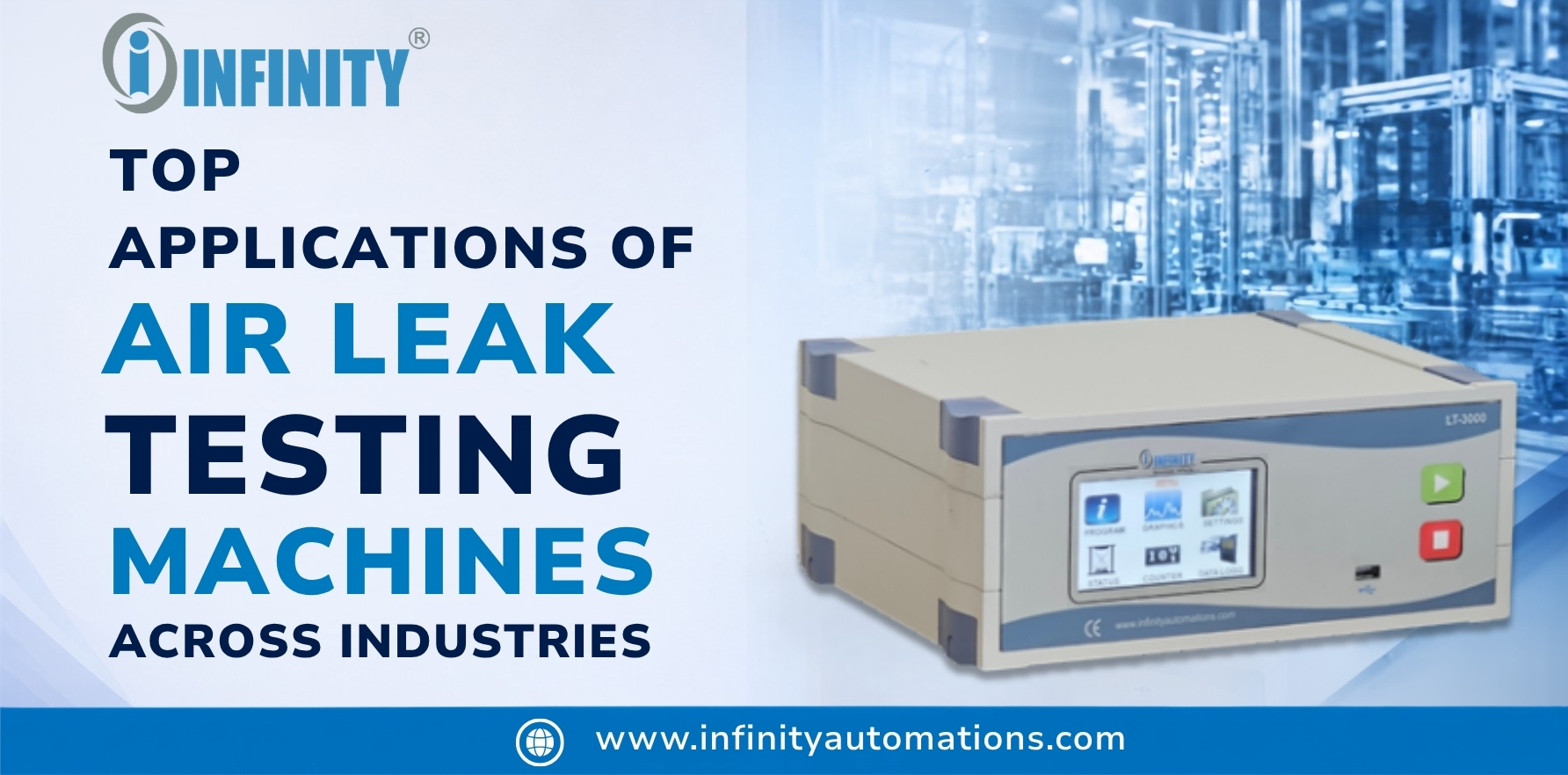
Air Leak Testing Machines are used across automotive, EV battery, medical device, plastic component, packaging, consumer product, aerospace, and industrial manufacturing applications. They help manufacturers identify leaks, verify sealing integrity, reduce defects, and support reliable production quality through methods such as Pressure Decay Testing, differential pressure testing, and airflow measurement.
As manufacturing standards continue to evolve, product quality is no longer measured solely by appearance or dimensional accuracy. Across industries such as automotive, medical devices, electric vehicles (EVs), consumer products, packaging, aerospace, and industrial manufacturing, ensuring that components are completely leak-free has become a critical quality requirement.
Even microscopic leaks can lead to product failures, reduced performance, safety hazards, regulatory non-compliance, expensive recalls, and customer dissatisfaction. To eliminate these risks, manufacturers rely on Air Leak Testing Machines to verify the integrity of products before they leave the production line.
Modern leak testing systems use advanced technologies such as Pressure Decay Testing, differential pressure testing, and airflow measurement to detect even the smallest leaks with exceptional accuracy. As production lines become increasingly automated under Industry 4.0, Air Leak Testing Machine Applications continue to expand across virtually every manufacturing sector.
This guide explores the most common industrial applications of air leak testing, explains why leak testing is essential in each industry, and highlights how manufacturers benefit from automated quality inspection.
What Are Air Leak Testing Machine Applications?
Air Leak Testing Machine Applications refer to the wide range of industries and products where leak testing systems are used to verify sealing integrity before products are shipped to customers.
Depending on the application, leak testing systems may inspect plastic components, metal assemblies, medical devices, automotive parts, EV battery enclosures, packaging, pumps, valves, filters, fluid reservoirs, electrical enclosures, and consumer appliances.
These inspections ensure products perform safely and reliably throughout their service life.
Why Air Leak Testing Is Essential
Leak testing plays an important role in quality assurance because it helps manufacturers:
- Detect defects before shipment
- Prevent field failures
- Reduce warranty claims
- Improve customer satisfaction
- Comply with international quality standards
- Reduce production waste
- Increase manufacturing efficiency
- Improve product reliability
Because air leak testing is non-destructive, inspected products can continue directly to the next production stage without damage.
Automotive Air Leak Testing
The automotive industry is one of the largest users of industrial leak testing equipment. Modern vehicles contain numerous sealed systems that must remain leak-free throughout their operating life.
Common Automotive Components Tested
- Fuel tanks
- Air intake manifolds
- Radiators
- Coolant reservoirs
- Brake system components
- Fuel rails
- Plastic welded assemblies
- Washer fluid tanks
- HVAC components
- Turbocharger ducts
- Engine covers
Why Leak Testing Matters
Even minor leaks can lead to reduced fuel efficiency, engine performance issues, increased emissions, cooling system failures, and safety risks. Automated leak testing ensures every component meets strict OEM quality requirements before assembly.
EV Battery Leak Testing
Electric vehicles have introduced new quality challenges, particularly around battery safety. Battery packs and battery housings must remain sealed against water, dust, moisture, chemicals, and road contaminants.
Components Commonly Tested
- Battery housings
- Battery covers
- Cooling plates
- Battery modules
- Charging connectors
- Thermal management systems
Importance of Leak Testing
Leak-free battery enclosures help prevent moisture ingress, protect electronic components, improve battery life, enhance passenger safety, and meet IP protection standards. As EV adoption grows, leak testing has become a critical manufacturing process.
The applicable leak rate, test pressure and acceptance criteria depend on the battery enclosure design, cooling architecture, applicable protection requirements and manufacturer's specifications.
Explore EV Battery Leak Testing solutions
Medical Device Leak Testing
Healthcare products require exceptional quality because patient safety depends on product integrity. Even microscopic leaks can compromise sterility and functionality.
Medical Components Tested
- Catheters
- IV connectors
- Syringes
- Drug delivery devices
- Diagnostic cartridges
- Blood collection systems
- Medical filters
- Respiratory equipment
- Infusion devices
Why Leak Testing Is Essential
Medical Device Leak Testing helps verify sealing and containment requirements that contribute to medical-device quality, sterility assurance and regulatory compliance, depending on the device and applicable validation requirements. Modern leak testing systems provide highly repeatable, non-destructive inspection suitable for medical manufacturing.
Plastic Component Leak Testing
Many plastic products are assembled using plastic welding technologies such as Hot Plate Welding, Ultrasonic Welding, Spin Welding, and Vibration Welding. After welding, manufacturers perform Plastic Component Leak Testing to verify joint integrity.
Common Components
- Plastic tanks
- Battery cases
- Fluid reservoirs
- Pump housings
- Pipe fittings
- Automotive ducts
- Valve bodies
- Filter housings
- Plastic containers
Benefits
Leak testing confirms weld quality, pressure resistance, structural integrity, and product reliability. This step is particularly important for components that transport liquids or gases.
Packaging Leak Testing
The packaging industry relies heavily on leak testing to protect product quality and extend shelf life.
Packaging Products Tested
- Food containers
- Pharmaceutical packaging
- Cosmetic bottles
- Flexible pouches
- Beverage containers
- Bottle caps
- Blister packs
Benefits
Packaging Leak Testing helps maintain freshness, prevent contamination, extend product shelf life, reduce product recalls, and improve consumer confidence.
Consumer Product Leak Testing
Many everyday household products require leak-proof performance.
Examples include:
- Water purifiers
- Coffee machines
- Kitchen appliances
- Vacuum cleaners
- Water bottles
- Sports bottles
- Garden equipment
- Pressure sprayers
Leak testing ensures these products operate safely throughout their intended lifespan.
Aerospace Leak Testing
The aerospace industry has some of the most demanding quality requirements. Components often operate under extreme pressure and temperature conditions.
Aerospace Applications
- Hydraulic systems
- Fuel systems
- Oxygen systems
- Pressure vessels
- Fluid connectors
- Aircraft valves
- Cabin pressure components
Why Leak Testing Is Critical
Leak testing improves flight safety, system reliability, regulatory compliance, and maintenance efficiency. Precision leak testing is essential because even tiny leaks can affect aircraft performance.
Industrial Leak Testing
Beyond specialized industries, Industrial Leak Testing is widely used across manufacturing sectors.
Common Industrial Products
- Pumps
- Valves
- Heat exchangers
- Pressure vessels
- Compressors
- Chemical tanks
- Pipe fittings
- Industrial filters
- Pneumatic components
- Fluid control systems
Manufacturers use leak testing to ensure products perform reliably under operating pressure.
Typical Air Leak Testing Process
Although applications vary, most industries follow a similar testing sequence.
- Load the product into the fixture.
- Seal all testing ports.
- Pressurize the component.
- Allow stabilization.
- Measure pressure decay or airflow.
- Compare readings against acceptance criteria.
- Display pass/fail results.
- Record production data.
- Unload the product.
This standardized workflow ensures repeatable and accurate quality inspection.
Benefits of Air Leak Testing Across Industries
Regardless of the product, leak testing delivers several common advantages.
Leak testing identifies defective components before shipment.
Early defect detection minimizes field failures.
Reliable products improve customer confidence and brand reputation.
Automated testing supports high-speed manufacturing.
Reduced scrap and rework improve profitability.
Leak testing helps manufacturers comply with industry-specific quality standards.
Modern systems integrate with PLCs, robots, conveyors, MES software, barcode scanners, and vision inspection systems.
Explore Turnkey Assembly Automation
Choosing the Right Air Leak Testing Machine
Different applications require different leak testing solutions. Consider the following factors before selecting equipment:
Product Geometry
Custom fixtures ensure accurate sealing and repeatability.
Leak Sensitivity
Determine the smallest acceptable leak rate.
Production Volume
High-volume manufacturing benefits from automated systems.
Automation Requirements
Evaluate compatibility with your existing production line.
Traceability
Choose machines capable of recording test results, product IDs, operator details, time stamps, and pass/fail status.
Future Trends in Air Leak Testing Machine Applications
The future of leak testing is driven by Industry 4.0 technologies.
Emerging trends include:
- AI-powered defect analysis
- IoT-enabled machine monitoring
- Predictive maintenance
- Cloud-based quality dashboards
- Automatic calibration
- Digital traceability
- Machine vision integration
- Robotic loading systems
- Real-time production analytics
These innovations improve testing accuracy while reducing operating costs and downtime.
Air Leak Testing Machine Applications Across Industries
| Industry | Typical Products Tested | Primary Objective |
|---|---|---|
| Automotive | Fuel tanks, radiators, manifolds | Leak-free fluid and air systems |
| EV Battery | Battery housings, cooling systems | Moisture and dust protection |
| Medical Devices | Catheters, syringes, IV connectors | Sealing, sterility and patient safety |
| Plastic Components | Tanks, reservoirs, welded assemblies | Verify weld integrity |
| Packaging | Food containers, pouches, bottles | Product freshness and contamination prevention |
| Consumer Products | Water bottles, appliances, filters | Product reliability |
| Aerospace | Hydraulic systems, valves, fuel systems | Safety and regulatory compliance |
| Industrial Manufacturing | Pumps, valves, heat exchangers | Pressure integrity and performance |
Why Choose Infinity Automation Systems for Air Leak Testing?
Infinity Automation Systems Private Limited develops Air Leak Testing and industrial automation solutions for manufacturing applications. Its leak testing systems support pressure and vacuum conditions, differential pressure decay measurement, production data acquisition and integration with industrial communication systems. Solutions can be configured for applications ranging from automotive and industrial components to EV battery systems and other sealed assemblies.
Need the Right Air Leak Testing Solution for Your Application?
Tell us about your product geometry, acceptable leak rate, production volume and automation requirements. Our engineering team can help identify a suitable leak testing approach.
Discuss Your Requirement → Explore Air Leak Testing Solutions →Conclusion
The growing demand for safer, more reliable, and higher-quality products has made Air Leak Testing Machine Applications an essential part of modern manufacturing. From Automotive Air Leak Testing and EV Battery Leak Testing to Medical Device Leak Testing, Plastic Component Leak Testing, Packaging Leak Testing, and Industrial Leak Testing, these systems play a vital role in ensuring that products meet strict performance and safety standards.
By detecting leaks early in the production process, manufacturers can reduce defects, minimize warranty claims, improve customer satisfaction, and maintain compliance with industry regulations. As Industry 4.0 continues to transform manufacturing, advanced air leak testing solutions featuring automation, AI-driven analytics, IoT connectivity, and real-time traceability will become increasingly important.
Choosing the right leak testing solution for your specific application not only improves product quality but also enhances production efficiency and long-term operational performance, making it a valuable investment for manufacturers across virtually every industry.
Contact Infinity Automation Systems to discuss your air leak testing requirements.
Frequently Asked Questions (FAQs)
Automotive, EV battery manufacturing, medical devices, plastic components, packaging, aerospace, consumer products, and industrial manufacturing are among the most common applications.
Automotive Air Leak Testing helps ensure fuel systems, cooling systems, and other sealed automotive components remain leak-free, improving safety, reliability, and quality.
Plastic Component Leak Testing verifies welded joints and sealed plastic assemblies to help confirm pressure resistance, structural integrity, and product reliability.
Yes. Air Leak Testing can be used for medical devices to help verify sealing integrity, fluid containment, sterility-related requirements, and product reliability.
Absolutely. Modern systems integrate with PLCs, robots, conveyors, MES software, barcode scanners, and vision inspection systems for fully automated quality control.
An Air Leak Testing Machine is a testing system used to identify leaks and verify sealing integrity in components and assemblies. Depending on the application, systems can use pressure decay, differential pressure or airflow measurement.
Automotive applications can include fuel tanks, radiators, coolant reservoirs, brake components, fuel rails, plastic welded assemblies, HVAC components, turbocharger ducts and engine-related components.
Yes. Air Leak Testing can be used for EV battery housings, battery covers, cooling plates, battery modules, charging connectors and thermal-management systems. The testing helps identify leakage that could allow moisture or contaminants to enter sealed assemblies.
Key factors include product geometry, required leak sensitivity, production volume, automation requirements and traceability. Fixture design and integration with the existing production line should also be considered.
Yes. Modern systems can integrate with PLCs, robots, conveyors, MES software, barcode scanners and vision inspection systems for automated quality control and production traceability.