Hot Plate Welder: Working Principle, Process, Benefits & Industrial Applications
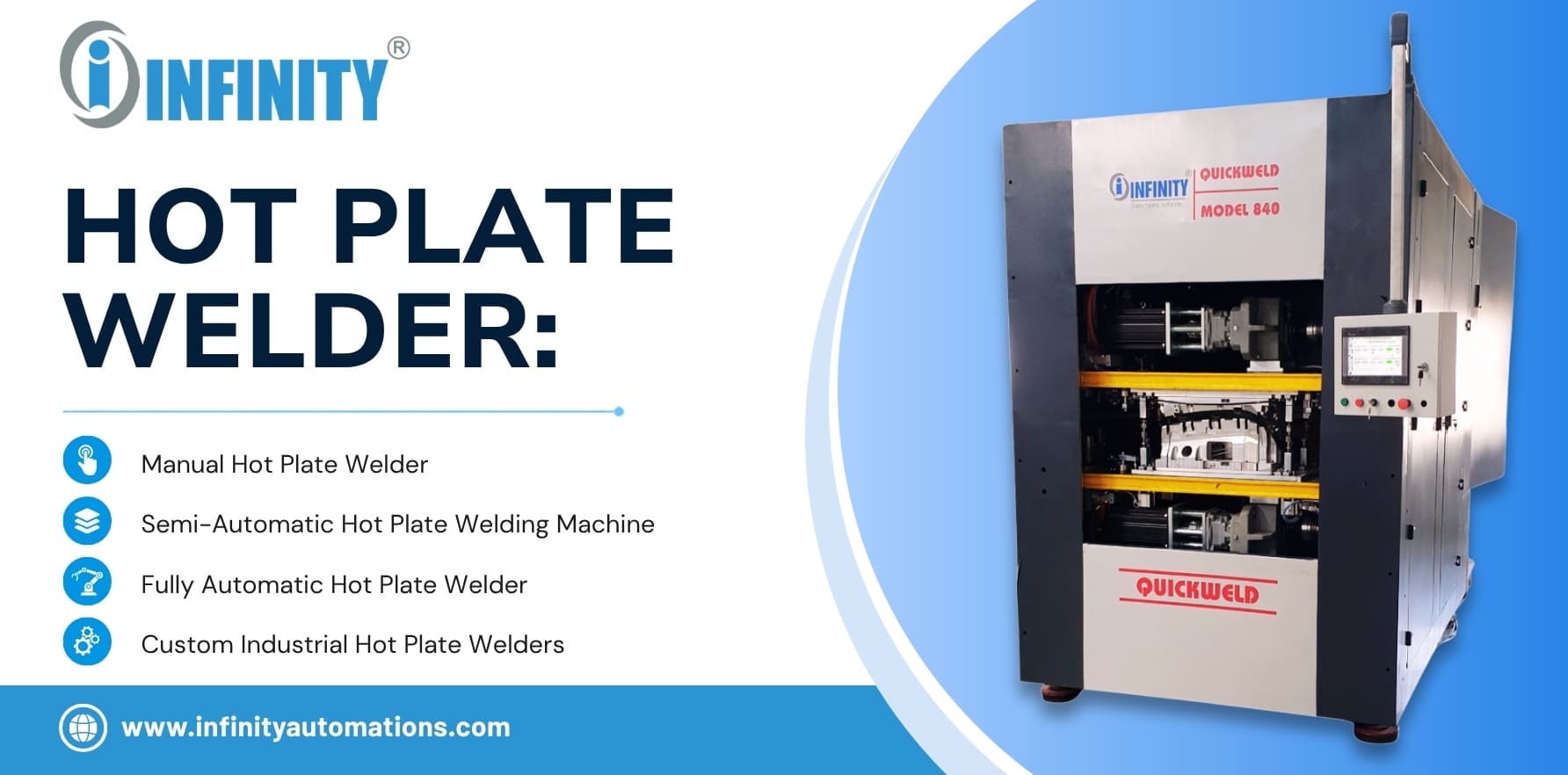
In today's competitive manufacturing landscape, industries are constantly seeking reliable and efficient methods to join thermoplastic components with high precision. Whether in automotive, medical, electrical, consumer goods, or packaging manufacturing, producing strong, leak-proof, and durable plastic assemblies is essential for maintaining product quality and operational efficiency. Among the various plastic joining technologies available, the Hot Plate Welder has become one of the most dependable solutions for creating permanent, high-strength bonds between thermoplastic parts.
Unlike adhesive bonding or mechanical fastening, the Hot Plate Welding Process uses controlled heat and pressure to fuse plastic components at a molecular level. This technique creates robust, repeatable welds without the need for additional fasteners or chemical adhesives, making it an ideal choice for manufacturers aiming to improve product reliability while reducing production costs. From welding automotive fluid reservoirs and battery housings to manufacturing medical containers and industrial enclosures, hot plate welding technology is widely adopted across numerous sectors where consistent weld quality is critical.
Modern Hot Plate Welding Machines are designed to deliver accurate temperature control, precise alignment, and repeatable welding cycles, ensuring excellent joint integrity even in demanding production environments. As manufacturing continues to embrace automation and Industry 4.0 practices, these machines are increasingly integrated into automated production lines to enhance productivity, minimize human error, and maintain consistent product quality.
This comprehensive guide explores everything you need to know about Hot Plate Welders, including their working principle, machine components, welding process, key advantages, industrial applications, compatible materials, maintenance practices, and practical considerations for selecting the right machine. Whether you are a manufacturing professional, production engineer, business owner, or simply researching plastic welding technologies, this guide will provide valuable insights into how hot plate welding supports modern industrial manufacturing.
What is a Hot Plate Welder?
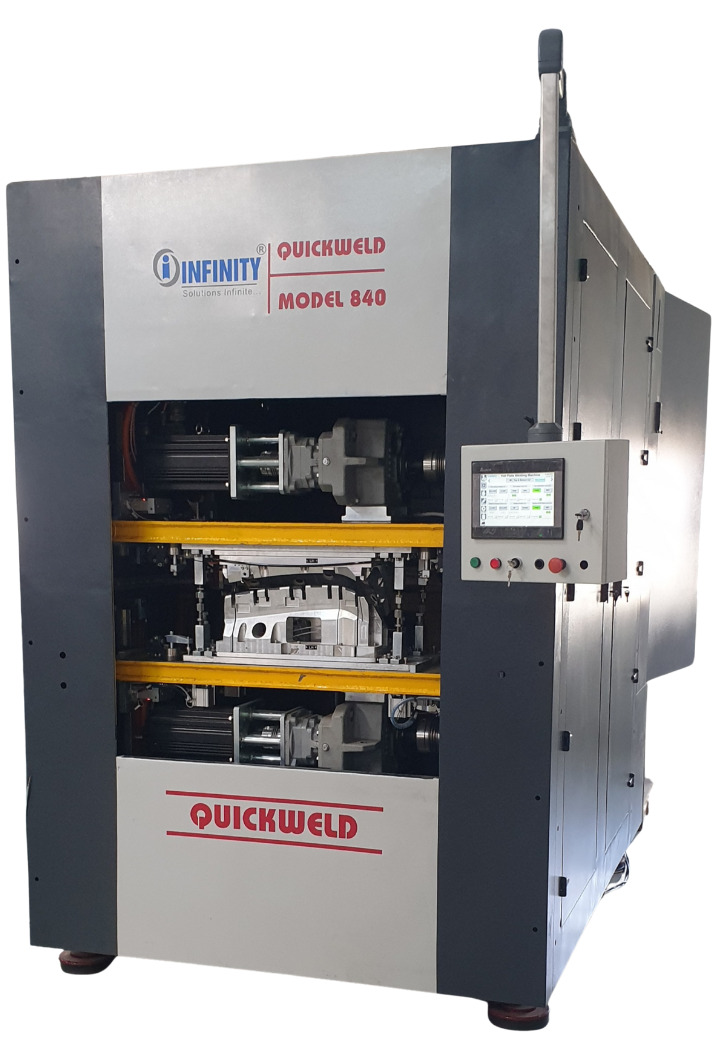
A Hot Plate Welder is an industrial plastic welding machine designed to permanently join two thermoplastic components by applying controlled heat and pressure. The process uses a heated metal plate, known as the hot plate, to soften the mating surfaces of the plastic parts. Once the surfaces reach the required melting temperature, the hot plate is retracted, and the components are pressed together under controlled force. As the material cools, the molten plastic molecules fuse to form a strong, durable, and leak-proof joint.
Unlike mechanical fasteners, screws, rivets, or chemical adhesives, a hot plate welder creates a homogeneous bond by directly joining the plastic material itself. This results in superior joint strength, excellent sealing performance, and consistent weld quality, making the technology ideal for products that must withstand pressure, vibration, moisture, or harsh operating conditions.
One of the key advantages of hot plate welding is its ability to weld large, complex, and irregularly shaped plastic components that may not be suitable for other welding methods. The process is particularly effective for joining thermoplastics with broad welding surfaces, making it a preferred solution in high-volume industrial manufacturing.
Today, Industrial Hot Plate Welders are widely used in automated production lines where repeatability, precision, and production efficiency are essential. Modern systems often integrate PLC controls, programmable welding parameters, and automated material handling to ensure consistent performance across every production cycle.
How Does a Hot Plate Welding Machine Work?
A Hot Plate Welding Machine operates using a simple yet highly effective principle of controlled heat transfer and pressure. Instead of melting the entire component, only the surfaces that need to be joined are heated to a precise temperature.
The welding cycle begins by securely positioning the plastic components in specially designed fixtures that maintain perfect alignment throughout the process. A temperature-controlled hot plate then moves between the two components, allowing each surface to contact the heated plate for a predetermined time. During this stage, the plastic surfaces soften and develop a thin molten layer.
After sufficient heating, the hot plate retracts automatically, and the softened plastic parts are immediately pressed together under carefully controlled pressure. The molten material flows together, allowing the polymer chains from both components to intermingle. As the joint cools, these molecular bonds solidify into a single, permanent structure that provides exceptional mechanical strength and sealing performance.
Because temperature, pressure, and heating time are precisely controlled, the process delivers highly repeatable results with minimal material waste. This level of consistency makes hot plate welding suitable for industries where product quality and reliability cannot be compromised.
Which Plastics Can Be Welded Using a Hot Plate Welder?
Hot plate welding is specifically designed for thermoplastic materials, which soften when heated and regain their strength after cooling. Since each material has its own melting characteristics, welding parameters such as temperature, heating duration, and pressure must be adjusted accordingly to achieve optimal results.
| Plastic Material | Common Industrial Applications |
|---|---|
| Polypropylene (PP) | Automotive reservoirs, battery cases, fluid tanks, packaging products |
| Polyethylene (PE) | Water tanks, chemical containers, piping systems, storage solutions |
| High-Density Polyethylene (HDPE) | Fuel tanks, industrial containers, heavy-duty storage products |
| Acrylonitrile Butadiene Styrene (ABS) | Automotive interior parts, electrical housings, consumer appliances |
| Polyamide (PA/Nylon) | Mechanical components, industrial assemblies, engineering products |
| Polycarbonate (PC) | Protective covers, lighting components, electronic enclosures |
| Thermoplastic Elastomers (TPE) (selected grades) | Sealing applications and specialized industrial products |
Types of Hot Plate Welding Machines
Hot plate welding equipment is available in different configurations to suit varying production requirements, product sizes, and automation levels. Choosing the right machine depends on production volume, component complexity, and process consistency requirements.
Manual Hot Plate Welder
Manual machines require operators to load components, initiate the welding cycle, and remove the finished assembly. They are commonly used for prototype development, low-volume production, laboratory testing, and small manufacturing operations where production flexibility is more important than speed.
Semi-Automatic Hot Plate Welding Machine
Semi-automatic systems automate critical stages such as heating, plate movement, and pressure application while still requiring manual loading and unloading of components. These machines offer improved consistency, shorter cycle times, and higher productivity, making them suitable for medium-volume manufacturing environments.
Fully Automatic Hot Plate Welder
Fully automatic machines integrate programmable controls, automated fixtures, robotic handling, and process monitoring to perform the complete welding cycle with minimal operator intervention. These systems are widely used in mass production facilities where high throughput, repeatability, and quality assurance are essential.
Custom Industrial Hot Plate Welders
Many manufacturers require machines tailored to their unique products and production processes. Custom-built hot plate welders can be designed for specific component sizes, welding geometries, automation levels, and production line integration. Such solutions help improve operational efficiency while meeting precise manufacturing requirements.
Working Principle of a Hot Plate Welder
The working principle of a Hot Plate Welder is based on the controlled transfer of heat and pressure to create a permanent bond between two thermoplastic components. Instead of using adhesives, screws, or mechanical fasteners, the process joins plastic parts by softening their contact surfaces and allowing the material to fuse at a molecular level.
At the heart of the machine is a precisely heated metal plate, commonly referred to as the hot plate. This plate is maintained at a predetermined temperature using advanced temperature control systems to ensure consistent heat distribution. During the welding cycle, the mating surfaces of the plastic components come into contact with the heated plate for a specific duration. This controlled exposure softens only the joining surfaces without affecting the overall structure of the components.
Once the required melting condition is achieved, the hot plate is automatically retracted from between the parts. The softened plastic surfaces are then pressed together under controlled pressure. As they cool, the polymer chains from both components interlock and solidify, creating a strong, uniform, and durable weld that behaves as a single integrated structure.
Key Principles Behind Hot Plate Welding
- Controlled Heat Transfer – The heated plate transfers thermal energy directly to the contact surfaces of the plastic components. Since only the weld interface is heated, the remaining part retains its structural integrity, reducing the risk of distortion or deformation.
- Surface Softening and Melting – As heat is applied, the thermoplastic material gradually softens and forms a thin molten layer. The depth of this molten layer is carefully controlled to achieve optimum weld strength while preventing overheating.
- Molecular Fusion – When the heated surfaces are pressed together, the polymer molecules from both components intermingle. During cooling, these molecular chains solidify into a continuous structure, resulting in a weld that is both mechanically strong and highly resistant to leakage.
- Controlled Cooling – Cooling is just as important as heating. Maintaining the required pressure while the joint cools helps stabilize the weld, minimize internal stresses, and improve the overall strength and durability of the finished assembly.
Hot Plate Welding Process (Step-by-Step)
The Hot Plate Welding Process follows a carefully controlled sequence of operations. Each stage contributes to the quality, strength, and consistency of the final welded product.
Step 1: Component Preparation
The process begins by inspecting the plastic components to ensure they are clean, dry, and free from contaminants such as dust, oil, grease, or moisture. Any contamination on the welding surface can interfere with proper bonding and reduce weld quality. At this stage, manufacturers also verify that the components are dimensionally accurate and suitable for the selected welding parameters.
Step 2: Loading and Clamping
The plastic parts are placed into specially designed fixtures that securely hold them in the correct position throughout the welding cycle. Proper alignment is essential because even minor movement during welding can result in weak joints or dimensional inaccuracies. The clamping system applies uniform holding force without damaging the plastic components.
Step 3: Heating the Joint Surfaces
A temperature-controlled hot plate moves between the clamped components. Both mating surfaces are pressed lightly against the heated plate for a predetermined period. During this phase, the contact surfaces gradually soften, a thin molten layer develops, heat is distributed evenly across the welding area, and material deformation is carefully controlled. The heating duration varies depending on the plastic material, wall thickness, and component geometry.
Step 4: Hot Plate Retraction
After the required heating time is completed, the hot plate quickly retracts from the welding zone. This movement must occur rapidly and accurately because excessive delay allows the softened plastic surfaces to cool prematurely, reducing the quality of the molecular bond. Modern Industrial Hot Plate Welders use automated mechanisms to minimize changeover time and maintain process consistency.
Step 5: Joining Under Controlled Pressure
Immediately after the hot plate is removed, the softened plastic components are brought together under carefully controlled pressure. This stage allows the molten material from both surfaces to flow together, eliminating small gaps and creating a continuous weld interface. Maintaining the correct joining pressure is critical because too little pressure may result in weak bonding, while excessive pressure may squeeze out too much molten material and reduce weld strength. Proper pressure ensures excellent structural integrity and uniform weld formation.
Step 6: Cooling and Solidification
The welded components remain clamped while the joint cools naturally under pressure. During cooling, polymer chains solidify, internal stresses are reduced, the weld gains its final mechanical strength, and dimensional stability is maintained. Removing the components before complete cooling may weaken the joint or cause distortion.
Step 7: Inspection and Quality Verification
Once the cooling cycle is complete, the finished assembly is removed from the machine and inspected to verify weld quality. Manufacturers commonly evaluate weld bead consistency, joint alignment, surface appearance, dimensional accuracy, mechanical strength, and leak-proof performance when required. For safety-critical products, additional testing methods such as pressure testing, tensile testing, or leak testing may be performed to ensure compliance with quality standards.
Factors That Influence Weld Quality
Achieving a strong and reliable weld depends on controlling several key process parameters:
| Process Parameter | Importance |
|---|---|
| Hot Plate Temperature | Ensures the plastic reaches the correct melting condition without overheating. |
| Heating Time | Determines the depth of the molten layer and overall bond quality. |
| Joining Pressure | Promotes proper molecular fusion while preventing excessive material displacement. |
| Changeover Time | Reduces heat loss between heating and joining, improving weld consistency. |
| Cooling Time | Allows the joint to stabilize and develop its full mechanical strength. |
| Fixture Alignment | Maintains accurate positioning and prevents dimensional errors. |
| Material Compatibility | Ensures the selected thermoplastic is suitable for hot plate welding. |
By carefully controlling these parameters, manufacturers can achieve consistent weld quality, improved production efficiency, and reliable long-term performance.
Why Understanding the Working Principle Matters
A clear understanding of the Hot Plate Welding Process enables manufacturers to optimize production, reduce defects, and improve product reliability. Whether producing automotive reservoirs, medical components, electrical enclosures, or industrial plastic assemblies, mastering the relationship between heat, pressure, and cooling helps achieve repeatable, high-strength welds with minimal waste. As manufacturing continues to adopt automation and smart production technologies, hot plate welding remains one of the most dependable methods for joining thermoplastic components with precision, efficiency, and long-term durability.
Main Components of a Hot Plate Welding Machine
A Hot Plate Welding Machine consists of several precisely engineered components that work together to produce accurate, repeatable, and high-strength plastic welds. Each component has a specific role in controlling heat, pressure, alignment, and movement throughout the welding cycle. The performance of the entire system depends on how efficiently these components operate in synchronization.
Modern Industrial Hot Plate Welders are designed with advanced control systems and robust mechanical assemblies to ensure consistent welding quality while minimizing production downtime. Understanding these components helps manufacturers select the right machine and maintain reliable production performance.
| Component | Primary Function |
|---|---|
| Heating Plate (Hot Plate) | Transfers controlled heat to soften the plastic surfaces before welding. |
| Heating System | Maintains the required welding temperature throughout the process. |
| Clamping Fixtures | Securely hold and align the plastic components during welding. |
| Pneumatic or Servo Drive System | Controls the movement of the hot plate and welding fixtures. |
| PLC Control System | Automates and monitors the complete welding cycle. |
| Temperature Controller | Continuously regulates the hot plate temperature for consistent results. |
| Sensors and Safety Devices | Monitor machine operation and protect both equipment and operator. |
| Machine Frame | Provides structural stability and minimizes vibration during welding. |
| Cooling System | Assists in maintaining machine performance and process stability where required. |
1. Heating Plate (Hot Plate)
The heating plate is the heart of every hot plate welding machine. It is a specially engineered metal plate that transfers heat uniformly to the mating surfaces of the thermoplastic components.
During the welding cycle, both plastic parts are brought into contact with the heated plate for a predetermined period. This controlled heating softens only the joining surfaces while preserving the shape and structural integrity of the remaining component.
A high-quality hot plate is designed to provide:
- Uniform heat distribution
- Stable operating temperatures
- Excellent surface finish
- Long service life
- Consistent welding performance
The surface of the hot plate is often coated with a non-stick material to prevent molten plastic from adhering to it during repeated production cycles.
2. Heating System
The heating system generates and maintains the temperature required for the welding process. Industrial machines use electric heating elements combined with precision controllers to ensure the hot plate remains within the desired temperature range throughout production.
Stable temperature control is essential because even minor fluctuations can affect weld quality. Excessive heat may degrade the plastic material, while insufficient heat can result in weak or incomplete welds.
A well-designed heating system helps manufacturers achieve:
- Faster production cycles
- Consistent weld strength
- Reduced material waste
- Improved product reliability
3. Clamping Fixtures
Clamping fixtures are responsible for holding the plastic components securely during each stage of the welding process. Proper alignment is critical because any movement or misalignment can create uneven welds, dimensional inaccuracies, or weak joints.
These fixtures are typically customized according to the shape and size of the component being welded. By maintaining accurate positioning, they ensure that pressure is distributed evenly across the entire welding surface.
Well-designed fixtures contribute to:
- Accurate component alignment
- Improved repeatability
- Reduced rejection rates
- Higher production efficiency
4. Pneumatic or Servo Drive System
The drive system controls the movement of the machine throughout the welding cycle. It moves the hot plate into position, retracts it after heating, and applies the required joining pressure.
Depending on the application, machines may use:
- Pneumatic Systems: Common in standard industrial applications due to their simplicity, reliability, and cost-effectiveness.
- Servo-Driven Systems: Offer higher positioning accuracy, programmable motion control, and better repeatability, making them suitable for precision manufacturing and automated production lines.
5. PLC Control System
The Programmable Logic Controller (PLC) acts as the machine's central control unit. It manages every stage of the welding cycle by coordinating temperature, timing, pressure, and machine movements according to predefined settings.
Modern PLC-controlled systems allow manufacturers to automate repetitive operations while maintaining consistent product quality.
Typical functions include:
- Managing heating time
- Controlling joining pressure
- Monitoring cooling duration
- Synchronizing machine movements
- Storing production parameters
- Displaying operational status
Automation through PLC control helps reduce operator dependency and improves overall manufacturing efficiency.
6. Temperature Controller
Accurate temperature control is one of the most critical factors in achieving high-quality welds. The temperature controller continuously monitors the hot plate and adjusts the heating elements to maintain the desired operating temperature.
Consistent temperature control offers several advantages:
- Uniform melting of plastic surfaces
- Improved weld strength
- Lower defect rates
- Better repeatability
- Extended equipment life
Many modern machines feature digital temperature controllers that provide precise monitoring and easy parameter adjustment.
7. Sensors and Safety Devices
Industrial hot plate welding machines are equipped with multiple sensors that continuously monitor the welding process and machine operation. These sensors help maintain process consistency while protecting both the equipment and the operator.
Common monitoring functions include:
- Temperature monitoring
- Position detection
- Pressure verification
- Cycle completion confirmation
- Safety interlock monitoring
Safety features such as emergency stop buttons, protective guarding, and interlock systems help ensure safe machine operation, particularly in high-volume manufacturing environments.
8. Machine Frame
The machine frame provides the structural foundation for the entire welding system. It supports all mechanical and electrical components while maintaining stability during operation.
A rigid frame minimizes vibration and unwanted movement, helping maintain alignment accuracy throughout the welding process. This stability contributes directly to improved weld consistency and longer machine service life.
Industrial machines are generally built using heavy-duty steel structures capable of withstanding continuous production demands.
9. Cooling System
Although the plastic components cool naturally under controlled pressure after welding, some machines also incorporate cooling mechanisms to improve overall thermal stability during extended production runs.
The cooling system helps:
- Maintain consistent machine performance
- Prevent excessive heat buildup
- Improve production efficiency
- Extend component life
- Support continuous manufacturing operations
The cooling method varies depending on machine design, production requirements, and the type of thermoplastic material being processed.
How These Components Work Together
A hot plate welding machine delivers reliable results because every component operates as part of an integrated system.
The welding cycle begins when the clamping fixtures securely position the plastic components. The heating system brings the hot plate to the required temperature, allowing the plastic surfaces to soften uniformly. Once heating is complete, the drive system retracts the hot plate and joins the components under controlled pressure. Throughout the process, the PLC, temperature controller, and sensors continuously monitor key parameters to ensure every weld meets the required quality standards. Finally, the machine frame provides stability while the components cool and solidify into a strong, permanent joint.
This coordinated operation enables manufacturers to produce consistent, high-quality welds with minimal defects and excellent repeatability.
Why Component Quality Matters
The performance of a Hot Plate Welder depends not only on the welding process but also on the quality and reliability of its individual components. Precision-engineered systems provide better temperature control, accurate alignment, consistent pressure application, and stable machine operation. These factors directly influence weld strength, production efficiency, and long-term equipment performance.
For manufacturers seeking dependable plastic joining solutions, investing in a well-designed hot plate welding machine helps improve product quality, reduce production errors, and support efficient manufacturing across a wide range of industrial applications.
Advantages of Hot Plate Welding & Why Manufacturers Prefer It
Selecting the right plastic joining technology can significantly impact product quality, production efficiency, and long-term manufacturing costs. Among the various plastic welding methods available, Hot Plate Welding has earned a strong reputation for delivering reliable, durable, and repeatable results across a wide range of industries.
Creates durable molecular bonds between thermoplastic components that perform similarly to the parent material.
Creates a continuous welded seam without gaps, ideal for products holding liquids, gases, or pressurized media.
Effectively joins products with large welding surfaces, irregular geometries, thick wall sections, and multi-piece assemblies.
Precisely controls temperature, heating time, joining pressure, and cooling duration for uniform product quality.
Supports PP, PE, HDPE, ABS, Nylon, PC, and selected engineering thermoplastics.
Easily integrates with PLC-controlled and robotic automation systems for high-volume production.
Eliminates screws, rivets, clips, and adhesives, simplifying assembly and reducing material costs.
Reduces rejected parts, lowers rework requirements, and supports automated operation for improved efficiency.
Creates strong joints using controlled heat and pressure without chemical adhesives or additional materials.
Records and manages heating temperature, duration, joining pressure, cooling time, and production status.
Why Manufacturers Choose Hot Plate Welding
The growing adoption of hot plate welding is driven by its ability to combine strength, precision, efficiency, and repeatability in a single manufacturing process. It is well suited for industries that require durable plastic assemblies capable of performing reliably under demanding operating conditions.
Manufacturers often prefer this technology because it offers:
| Manufacturing Requirement | How Hot Plate Welding Helps |
|---|---|
| High-strength plastic joints | Creates durable molecular bonds between thermoplastic components. |
| Leak-proof assemblies | Produces continuous welded seams for liquid and air-tight products. |
| Consistent production quality | Maintains repeatable welding parameters across every production cycle. |
| Automation compatibility | Easily integrates with modern automated manufacturing systems. |
| Large component welding | Suitable for medium and large thermoplastic parts with complex geometries. |
| Lower production waste | Reduces defective parts through controlled and repeatable welding processes. |
| Improved operational efficiency | Streamlines assembly by eliminating many additional joining methods. |
| Long-term manufacturing value | Supports reliable production with consistent product quality. |
Final Thoughts
The popularity of the Hot Plate Welder continues to grow because it addresses many of the challenges faced by modern manufacturers. Its ability to produce strong, leak-proof, and repeatable plastic joints while supporting automation and efficient production makes it one of the most dependable plastic welding technologies available today.
Whether manufacturing automotive components, industrial containers, electrical enclosures, or consumer products, businesses can benefit from the precision, reliability, and versatility offered by the Hot Plate Welding Process.
Industrial Applications of Hot Plate Welding
Hot Plate Welding is widely used across industries that require strong, durable, and leak-proof plastic joints. Its ability to deliver consistent weld quality makes it suitable for both standard and automated manufacturing processes.
- Automotive Industry – Used for welding fuel tanks, coolant reservoirs, washer tanks, battery housings, air ducts, and other plastic automotive components that require high-strength, leak-proof joints.
- Medical Industry – Ideal for manufacturing medical fluid containers, diagnostic equipment, laboratory devices, and healthcare products where precision and reliability are essential.
- Electrical & Electronics – Applied in the production of electrical enclosures, junction boxes, cable management systems, connectors, and protective housings for durable insulation and secure sealing.
- Packaging Industry – Used to manufacture plastic containers, industrial packaging, caps, closures, and storage solutions that require strong, consistent welds and reliable sealing.
- Consumer Products – Suitable for assembling household appliances, water purifiers, vacuum cleaner components, kitchen equipment, and other plastic consumer goods with durable joints.
- Industrial Manufacturing – Widely used for producing chemical tanks, industrial containers, machine covers, filtration systems, and custom thermoplastic assemblies for various manufacturing applications.
Conclusion
A Hot Plate Welder is one of the most reliable and efficient solutions for joining thermoplastic components in modern manufacturing. By combining controlled heat, precise pressure, and accurate process control, it creates strong, durable, and leak-proof joints that meet the quality demands of industries such as automotive, electrical, medical, packaging, and consumer products.
Understanding the Hot Plate Welding Process, machine components, compatible materials, and maintenance requirements enables manufacturers to improve production efficiency while maintaining consistent product quality. Compared to traditional joining methods, hot plate welding offers excellent repeatability, supports automation, and is suitable for medium to large plastic components where strength and reliability are essential.
As manufacturing continues to evolve with automation and Industry 4.0 technologies, investing in the right Hot Plate Welding Machine can help businesses enhance operational efficiency, reduce production errors, and deliver high-quality products to the market.
If you're looking for reliable industrial automation and plastic welding solutions, Infinity Automation Systems Private Limited provides customized automation systems designed to support diverse manufacturing requirements with precision, efficiency, and long-term performance.
Looking for a Customized Hot Plate Welder for Your Production Line?
Infinity Automation Systems provides reliable industrial automation and plastic welding solutions designed to support diverse manufacturing requirements with precision, efficiency, and long-term performance.
Contact Infinity Automation Systems →Frequently Asked Questions (FAQs)
A Hot Plate Welder is an industrial machine used to permanently join thermoplastic components by heating their mating surfaces with a temperature-controlled hot plate and then pressing them together to create a strong molecular bond.
The machine heats the plastic surfaces using a heated metal plate. Once the surfaces become molten, the hot plate retracts, and the components are pressed together under controlled pressure. After cooling, the joint becomes a permanent weld.
Common thermoplastics include Polypropylene (PP), Polyethylene (PE), HDPE, ABS, Polyamide (Nylon), Polycarbonate (PC), and selected engineering thermoplastics.
Major advantages include strong and permanent joints, leak-proof sealing, excellent repeatability, suitability for large plastic parts, automation compatibility, low maintenance, long service life, and high production efficiency.
Hot Plate Welding is widely used in Automotive, Medical Device Manufacturing, Electrical & Electronics, Consumer Products, Packaging, and Industrial Equipment Manufacturing.
Yes. Modern Industrial Hot Plate Welders can be integrated with PLC-controlled and robotic automation systems for high-volume manufacturing.
The quality of a hot plate weld depends on Temperature, Heating Time, Welding Pressure, Cooling Time, Component Alignment, and Material Compatibility.
Regular maintenance includes cleaning the hot plate, inspecting fixtures, checking pneumatic or servo systems, calibrating temperature controllers, verifying safety devices, and performing preventive maintenance.
Hot Plate Welding is generally preferred for larger thermoplastic components and applications requiring leak-proof joints, while ultrasonic welding is better suited for smaller parts and shorter welding cycles.
When selecting a machine, consider Production Volume, Plastic Material, Component Size, Automation Requirements, Temperature Control, Maintenance Support, and Future Scalability.