
Top Industries Using Batch Weighing Systems and Their Benefits
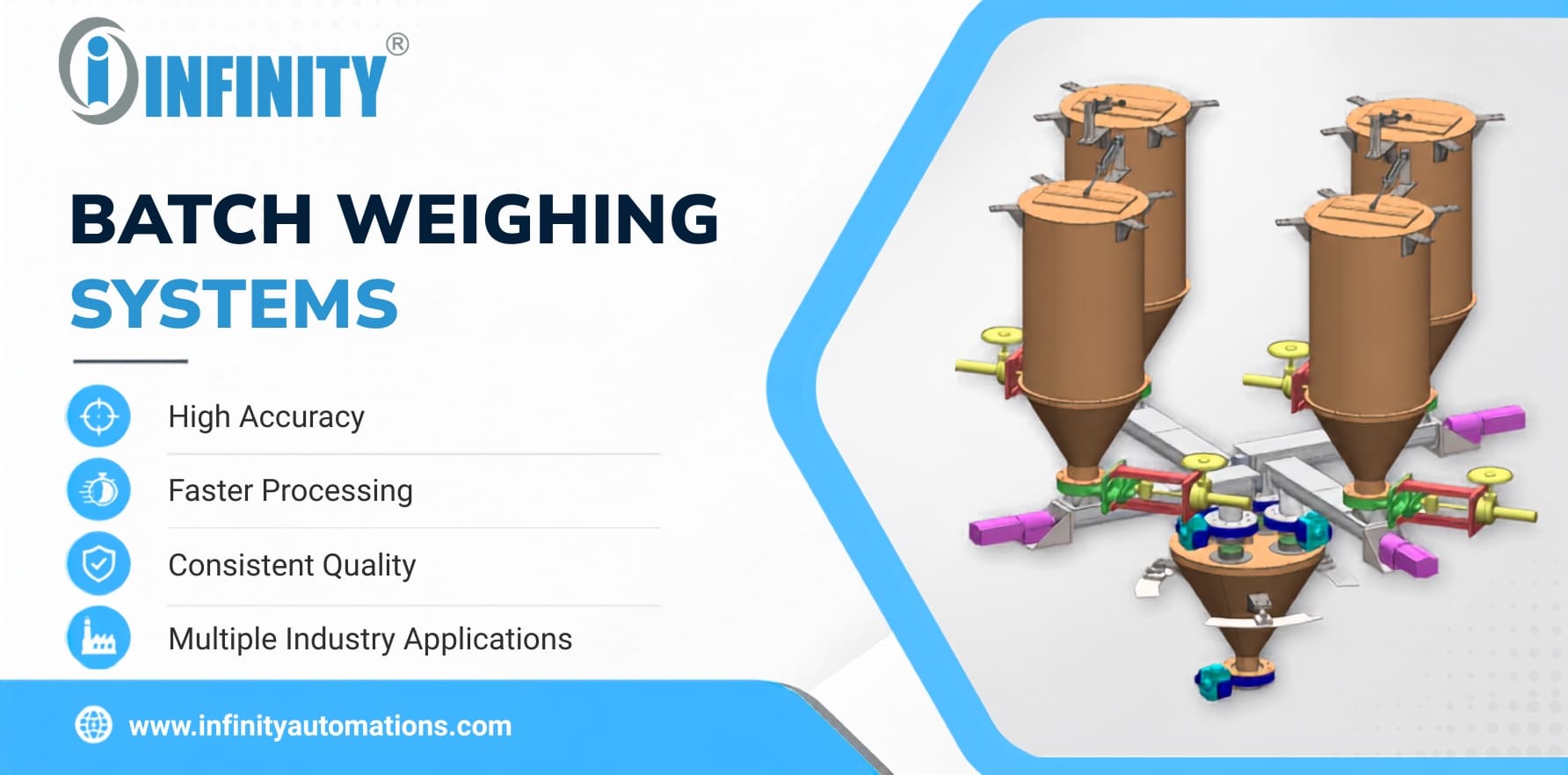
Precision and consistency are essential for preserving product quality and optimizing operating efficiency in today's cutthroat production market. Manufacturers depend on precise raw material measurement to guarantee that each manufacturing batch satisfies predetermined quality standards, whether they are making rubber compounds, chemical formulations, pharmaceutical items, food ingredients, plastics, fertilizers, or building materials.
Traditional manual weighing methods are often time-consuming and susceptible to human error, leading to inconsistent product quality, increased material wastage, and reduced productivity. As industries continue to adopt automation and Industry 4.0 technologies, Batch Weighing Systems have become an essential part of modern manufacturing processes.
A Batch Weighing System automatically measures, dispenses, and records the required quantity of multiple raw materials according to a predefined recipe. By replacing manual weighing with PLC-based automation, manufacturers can improve weighing accuracy, reduce production time, optimize material usage, and maintain complete batch traceability.
Today, Batch Weighing Systems are used across a wide range of industries, each with unique production requirements and material handling challenges. From automotive rubber components and specialty chemicals to food products and pharmaceutical formulations, these systems play a crucial role in delivering consistent quality while reducing operating costs.
In this article, we'll explore the top industries using Batch Weighing Systems, understand how they benefit from industrial weighing automation, and explain why these systems have become indispensable for modern manufacturing facilities.
What is a Batch Weighing System?

A Batch Weighing System is an automated industrial weighing solution that accurately measures and dispenses multiple raw materials according to a predefined recipe before they enter the production process. The system combines precision load cells, automated feeding mechanisms, PLC controls, and Human Machine Interface (HMI) software to ensure each ingredient is weighed accurately and consistently.
Unlike manual weighing, where operators measure each material individually, an automated Batch Weighing System continuously monitors the weight of every ingredient and automatically controls the feeding process. Once the programmed weight is achieved, the feeder stops, preventing overfeeding or underfeeding.
The weighed materials are then transferred to the next stage of production, such as a mixer, blender, reactor, extruder, or processing vessel.
Modern Batch Weighing Systems can also integrate with ERP, MES, and SCADA platforms to provide:
- Automatic recipe management
- Real-time production monitoring
- Batch traceability
- Material consumption reports
- Alarm management
- Production analytics
These capabilities help manufacturers improve quality control, reduce raw material wastage, and increase production efficiency while supporting Industry 4.0 initiatives.
Why Different Industries Need Batch Weighing Systems
Every manufacturing industry has its own production processes, quality standards, and raw material handling requirements. However, one common factor across all industries is the need for accurate and repeatable ingredient measurement.
A small variation in raw material quantity can affect the performance, appearance, strength, taste, or safety of the final product. This is why industries that rely on precise formulations increasingly invest in automated Batch Weighing Systems.
1. To Maintain Consistent Product Quality
Manufacturers must produce products with the same quality in every batch. Whether manufacturing rubber compounds, chemical mixtures, food products, or pharmaceutical formulations, consistency is essential for customer satisfaction and regulatory compliance. Batch Weighing Systems eliminate variations caused by manual weighing and ensure that every ingredient is dispensed according to the programmed recipe.
2. To Improve Production Accuracy
Manual weighing is prone to human errors such as incorrect measurements, recording mistakes, and inconsistent ingredient handling. Automated Batch Weighing Systems use precision load cells and PLC-based controls to achieve accurate and repeatable weighing, reducing production errors and improving process reliability.
3. To Reduce Raw Material Wastage
Raw materials often represent a significant portion of manufacturing costs. Overfeeding or underfeeding ingredients can increase wastage and negatively impact profitability. Batch Weighing Systems accurately control ingredient quantities, helping manufacturers optimize material utilization and reduce unnecessary losses.
4. To Increase Production Efficiency
Modern manufacturing facilities require faster production without compromising quality. Batch Weighing Systems automate ingredient weighing, material feeding, and recipe execution, reducing manual intervention and shortening production cycles.
5. To Support Multiple Product Recipes
Many industries manufacture different product variants using separate formulations. Modern Batch Weighing Systems store multiple recipes digitally, allowing operators to switch between products quickly without manual calculations.
6. To Improve Batch Traceability
Industries such as pharmaceuticals, food processing, and specialty chemicals require detailed production records for quality assurance and regulatory compliance. Batch Weighing Systems automatically record batch number, recipe used, ingredient quantities, production time, operator information, and alarm history.
7. To Support Smart Manufacturing
Today's factories are increasingly adopting Industry 4.0 technologies. Modern Batch Weighing Systems integrate with PLC Automation, SCADA Systems, ERP Software, Manufacturing Execution Systems (MES), and Industrial IoT Platforms for real-time production monitoring and analytics.
Industries Using Batch Weighing Systems
Modern manufacturing industries rely on Batch Weighing Systems to automate the precise measurement and dispensing of raw materials. Whether producing rubber compounds, specialty chemicals, food products, or pharmaceutical formulations, accurate batching plays a critical role in ensuring consistent quality, minimizing material wastage, and improving production efficiency.
1. Rubber Industry
The rubber industry is one of the largest users of Batch Weighing Systems because rubber compounding requires highly accurate ingredient proportions. Even small variations in raw material quantities can affect the mechanical properties, durability, elasticity, and performance of the final product.
Common Materials Used: Natural Rubber, Synthetic Rubber, Carbon Black, Silica, Process Oils, Sulphur, Zinc Oxide, Accelerators, Antioxidants, Processing Chemicals.
Manufacturing Challenges: Manual weighing errors, inconsistent rubber compound quality, high raw material wastage, longer batch preparation time, difficult recipe management, and increased labour dependency.
How Batch Weighing Systems Help: A PLC-controlled Batch Weighing System automates the weighing of each ingredient according to the selected recipe. Load cells continuously monitor the weight, while the PLC controls material feeding with high precision.
Benefits: High weighing accuracy, consistent rubber compound quality, reduced raw material wastage, faster production cycles, automatic recipe management, complete batch traceability, lower labour costs, and better inventory control.
Typical Applications: Tyre Manufacturing, Conveyor Belts, Rubber Hoses, Rubber Seals, Automotive Rubber Parts, Industrial Gaskets, Rubber Sheets.
2. Chemical Industry
The chemical industry requires precise formulation control to maintain product quality, process safety, and regulatory compliance. Many chemical products are manufactured by combining powders, granules, and liquids in exact proportions.
Common Materials Used: Industrial Chemicals, Powders, Granules, Pigments, Resins, Solvents, Additives, Catalysts.
Manufacturing Challenges: Inaccurate ingredient dosing, frequent recipe changes, material handling difficulties, operator exposure to hazardous materials, and production inconsistencies.
How Batch Weighing Systems Help: Automated Batch Weighing Systems accurately dispense each ingredient based on predefined recipes stored in the PLC. Digital recipe management allows manufacturers to switch between formulations quickly while maintaining precise dosing.
Benefits: Accurate chemical formulations, reduced operator intervention, improved process safety, faster recipe changeovers, better production traceability, lower raw material wastage, and improved batch consistency.
Typical Applications: Adhesives, Paints & Coatings, Specialty Chemicals, Industrial Cleaning Products, Water Treatment Chemicals, Resins, Polymer Compounds.
3. Food Industry
The food processing industry depends on accurate ingredient measurement to maintain consistent taste, texture, nutritional value, and food safety. Manufacturers producing bakery products, spices, snacks, beverages, and dairy products often process multiple recipes each day.
Common Ingredients: Flour, Sugar, Salt, Spices, Milk Powder, Cocoa, Starch, Food Additives, Flavouring Agents.
Manufacturing Challenges: Inconsistent ingredient measurement, product quality variations, ingredient wastage, frequent recipe changes, hygiene requirements, and manual documentation.
How Batch Weighing Systems Help: Food-grade Batch Weighing Systems use stainless steel contact parts and hygienic designs to accurately weigh ingredients before they are transferred to mixers or processing equipment.
Benefits: Consistent taste and texture, reduced ingredient wastage, improved food safety, faster production, easy recipe switching, complete production records, and better inventory control.
Typical Applications: Bakery Products, Spice Blending, Dairy Products, Beverage Powders, Ready-to-Eat Foods, Nutritional Supplements, Snack Foods.
4. Pharmaceutical Industry
The pharmaceutical industry demands extremely high weighing accuracy because even minor deviations can affect medicine quality, efficacy, and regulatory compliance. Automated Batch Weighing Systems help pharmaceutical manufacturers maintain precise ingredient measurement while ensuring complete batch traceability and Good Manufacturing Practice (GMP) compliance.
Common Materials Used: Active Pharmaceutical Ingredients (APIs), Excipients, Powders, Granules, Vitamins, Minerals, Nutraceutical Ingredients.
Manufacturing Challenges: Extremely accurate weighing, strict batch documentation, regulatory compliance, cross-contamination prevention, secure recipe management, and complete production traceability.
How Batch Weighing Systems Help: Batch Weighing Systems automate ingredient dispensing while recording detailed production information such as batch numbers, ingredient quantities, operator details, and production timestamps.
Benefits: High weighing precision, GMP-compliant batch records, reduced manual handling, better product consistency, improved quality assurance, faster production processes, and digital production documentation.
Typical Applications: Tablet Manufacturing, Capsule Production, Powder Blending, Nutraceutical Products, Medical Formulations, Veterinary Medicines.
5. Plastic Industry
The plastic manufacturing industry depends on precise material blending to produce products with consistent strength, colour, durability, and dimensional accuracy. Manufacturers typically process multiple raw materials, including virgin polymers, recycled plastics, fillers, additives, and colour masterbatches.
Common Materials Used: Virgin Plastic Granules, Recycled Plastic Granules, Colour Masterbatch, Fillers, Calcium Carbonate, Additives, Stabilizers, Processing Aids, UV Stabilizers.
Manufacturing Challenges: Colour inconsistency, incorrect additive dosing, material wastage, manual formulation errors, production downtime, and frequent product changeovers.
How Batch Weighing Systems Help: Automated Batch Weighing Systems accurately dispense polymers and additives based on stored recipes. The PLC continuously monitors material weight and automatically controls feeders to ensure precise batching.
Benefits: Accurate material batching, uniform product colour, consistent product quality, reduced raw material wastage, faster production setup, improved recipe management, better inventory control, and lower operating costs.
Typical Applications: Injection Moulding, Blow Moulding, Extrusion, PVC Compounding, Plastic Pipe Manufacturing, Plastic Sheet Production, Packaging Products, Household Plastic Products.
6. Construction Material Industry
The construction material industry relies on accurate proportioning of raw materials to manufacture products with consistent strength, durability, and quality. Materials such as cement, fly ash, sand, aggregates, lime, and chemical additives must be weighed precisely before mixing.
Common Materials Used: Cement, Fly Ash, Sand, Aggregates, Lime, Gypsum, Pigments, Chemical Additives, Silica.
Manufacturing Challenges: Inconsistent material proportions, product quality variations, high material wastage, manual weighing errors, and longer production cycles.
How Batch Weighing Systems Help: Automated weighing systems accurately measure each material before transferring it to mixers or production equipment. PLC-based automation controls the entire batching process while maintaining complete production records.
Benefits: Consistent product quality, improved mixing accuracy, reduced material losses, faster production cycles, lower labour costs, better process control, and increased plant productivity.
Typical Applications: Ready Mix Concrete Plants, Dry Mortar Plants, Wall Putty Manufacturing, Tile Adhesive Production, Cement Product Manufacturing, Paver Block Manufacturing, AAC Block Plants.
7. Fertilizer Industry
The fertilizer industry requires accurate blending of nutrients to produce high-quality fertilizers that deliver consistent agricultural performance. Incorrect proportions of nitrogen, phosphorus, potassium, and micronutrients can affect crop productivity and product quality.
Common Materials Used: Nitrogen, Phosphorus, Potassium, Micronutrients, Organic Fertilizer Ingredients, Mineral Additives, Granules, Powders.
Manufacturing Challenges: Inaccurate nutrient blending, material wastage, dust generation, production inconsistencies, and manual recipe calculations.
How Batch Weighing Systems Help: The system automatically dispenses each nutrient according to the selected formulation. Integrated PLC controls ensure precise weighing while digital recipe management simplifies production planning.
Benefits: Accurate nutrient blending, consistent fertilizer quality, reduced raw material wastage, faster batch preparation, better inventory management, and improved production efficiency.
Typical Applications: NPK Fertilizers, Organic Fertilizers, Micronutrient Blends, Granular Fertilizers, Specialty Fertilizers.
8. Animal Feed Industry
The animal feed industry requires precise ingredient measurement to ensure livestock receive balanced nutrition. Feed formulations consist of cereals, proteins, vitamins, minerals, oils, and nutritional supplements that must be accurately blended.
Common Materials Used: Maize, Wheat, Soybean Meal, Rice Bran, Vitamins, Minerals, Amino Acids, Feed Additives, Molasses, Vegetable Oils.
Manufacturing Challenges: Manual formulation errors, nutritional inconsistencies, ingredient wastage, slow production, and frequent recipe changes.
How Batch Weighing Systems Help: The system stores multiple feed formulations and automatically dispenses each ingredient according to the selected recipe. Real-time weighing ensures accurate nutritional composition while digital batch records improve quality control.
Benefits: Accurate feed formulations, improved nutritional consistency, faster production, lower raw material wastage, digital production records, and better inventory management.
Typical Applications: Poultry Feed, Cattle Feed, Aqua Feed, Pet Food, Pig Feed, Specialty Animal Nutrition.
Industry Comparison Table
Every manufacturing industry has unique production requirements, but they all share a common objective—accurate material batching, consistent product quality, and efficient production. The table below compares how different industries use Batch Weighing Systems and the primary benefits they achieve.
| Industry | Common Materials | Key Challenges | Benefits of Batch Weighing System |
|---|---|---|---|
| Rubber Industry | Natural Rubber, Carbon Black, Silica, Chemicals | Manual weighing, inconsistent compounds | Accurate formulations, improved product quality, reduced wastage |
| Chemical Industry | Powders, Resins, Pigments, Additives | Recipe variations, safety concerns | Precise dosing, improved safety, faster recipe changes |
| Food Industry | Flour, Sugar, Salt, Spices, Dairy Ingredients | Hygiene, ingredient consistency | Consistent taste, food safety, reduced ingredient losses |
| Pharmaceutical Industry | APIs, Powders, Vitamins, Excipients | Strict accuracy, regulatory compliance | High precision, complete batch traceability, GMP compliance |
| Plastic Industry | Polymers, Fillers, Masterbatch | Colour variation, material wastage | Uniform quality, lower additive consumption |
| Construction Material | Cement, Fly Ash, Sand, Pigments | Inconsistent mixing, material losses | Improved mix quality, better productivity |
| Fertilizer Industry | NPK, Micronutrients | Incorrect nutrient ratios | Accurate blending, consistent fertilizer quality |
| Animal Feed Industry | Cereals, Proteins, Vitamins | Nutritional inconsistencies | Accurate feed formulation, better production efficiency |
Benefits of Batch Weighing Systems Across Industries
Regardless of the industry, Batch Weighing Systems offer measurable improvements in manufacturing operations.
- Improved Weighing Accuracy – Accurate ingredient measurement ensures every production batch meets the desired formulation, reducing product variation and improving quality.
- Consistent Product Quality – Automated batching eliminates inconsistencies caused by manual weighing, ensuring uniform product quality across every batch.
- Reduced Raw Material Wastage – Precise dispensing minimizes overfeeding and underfeeding, helping manufacturers optimize material consumption and reduce production costs.
- Higher Production Efficiency – Automated ingredient feeding and recipe execution reduce production time, allowing manufacturers to increase output without compromising quality.
- Lower Labour Dependency – Automation minimizes manual intervention, reducing labour requirements and improving workplace productivity.
- Better Batch Traceability – Digital production records help manufacturers maintain complete traceability, making audits, quality control, and regulatory compliance easier.
- Easy Recipe Management – Modern Batch Weighing Systems can store multiple production recipes, allowing operators to switch between products quickly and accurately.
- Industry 4.0 Integration – Modern systems support integration with PLC Automation, SCADA Systems, ERP Software, MES Platforms, and Industrial IoT Solutions for centralized monitoring and real-time decision-making.
How to Choose the Right Batch Weighing System
Selecting the right Batch Weighing System depends on your manufacturing process, production goals, and material characteristics.
- Type of Material – Different materials require different feeding technologies (powders, granules, pellets, liquids, fibres).
- Production Capacity – Determine your daily or hourly production requirements to select a system that can handle your desired output efficiently.
- Number of Ingredients – The complexity of your formulation influences the system configuration. Multi-ingredient processes often require advanced recipe management and multiple feeding stations.
- Accuracy Requirements – Industries such as pharmaceuticals and food processing require extremely high weighing accuracy, while other applications may have different tolerance levels.
- Level of Automation – Choose between Semi-Automatic Batch Weighing Systems, Fully Automatic Batch Weighing Systems, or PLC-Based Intelligent Systems based on your production requirements and future scalability.
- Future Expansion – Invest in a solution that can be expanded or upgraded as production demands increase.
- Integration Requirements – Ensure the Batch Weighing System integrates with your existing PLC, SCADA, ERP, MES, Conveyor Systems, Mixers, and Packaging Equipment.
Why Choose Infinity Automation Systems Private Limited?
Choosing the right automation partner is as important as selecting the right equipment. Infinity Automation Systems Private Limited specializes in designing and manufacturing customized Batch Weighing Systems that help manufacturers improve production efficiency, weighing accuracy, and operational reliability.
Our Expertise:
- Customized Batch Weighing Systems
- PLC-Based Automation Solutions
- HMI Development
- Recipe Management Systems
- Material Handling Integration
- Industrial Control Panels
- SCADA Integration
- Industrial Automation Projects
Why Customers Choose Us:
- Industry-specific solutions
- Experienced automation engineers
- Customized system design
- Reliable after-sales support
- High-quality components
- Seamless production line integration
- Complete installation and commissioning services
Looking for a Customized Batch Weighing Solution?
Infinity Automation Systems Private Limited designs and manufactures customized Batch Weighing Systems tailored to your manufacturing process.
Our solutions help you:
Contact Our Automation Experts →
Frequently Asked Questions (FAQs)
Batch Weighing Systems are widely used in the rubber, chemical, food, pharmaceutical, plastic, fertilizer, animal feed, and construction material industries where precise ingredient measurement is essential.
Yes. Modern PLC-based systems support multiple recipes, allowing manufacturers to switch between different products quickly and accurately.
Yes. Batch Weighing Systems can be customized for small, medium, and large-scale manufacturing facilities based on production requirements and budget.
Yes. They can integrate with PLCs, SCADA systems, ERP software, conveyors, mixers, and packaging machines.
Accuracy depends on system configuration, load cell quality, calibration, and application requirements. Modern industrial systems are designed to provide highly repeatable and reliable weighing performance.